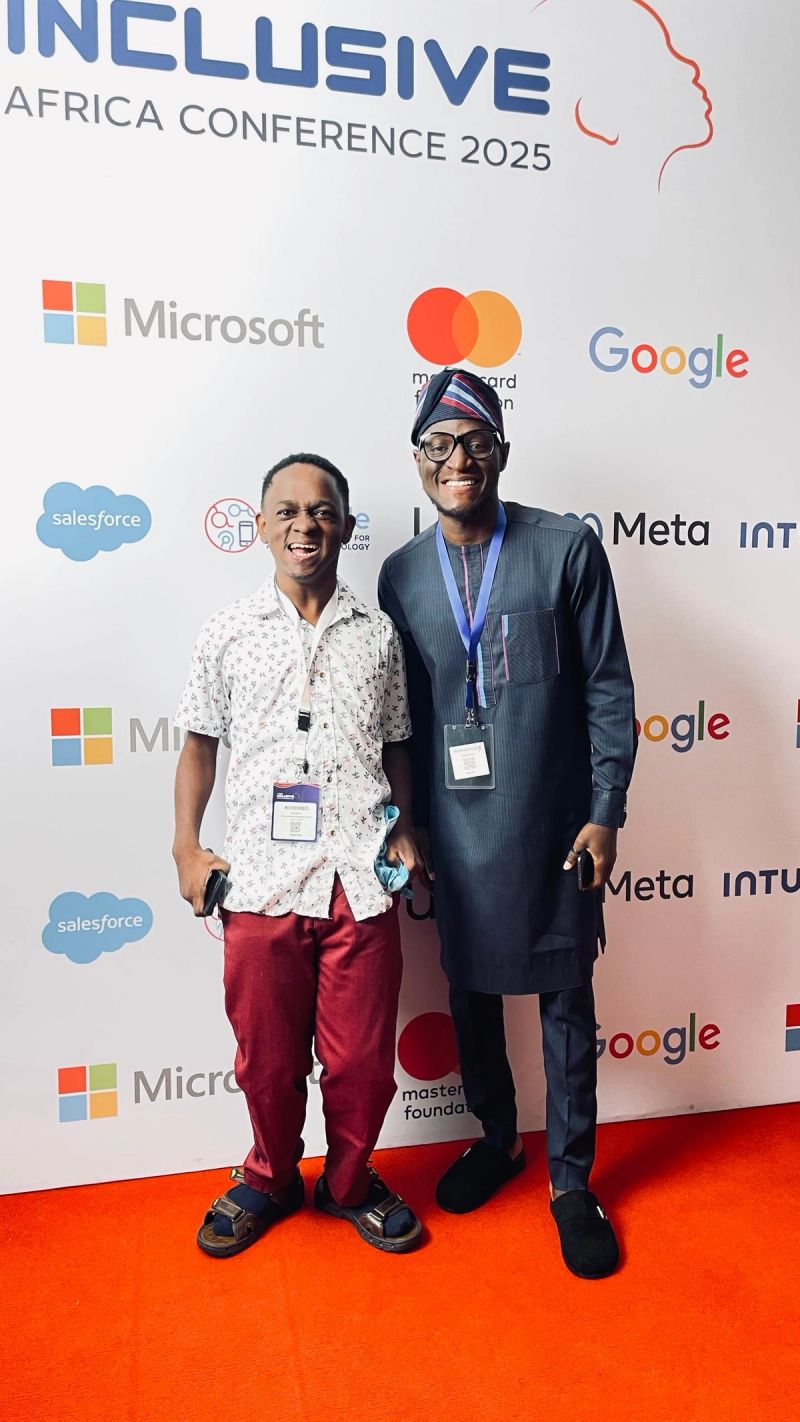
On June 2nd, I boarded yet another short flight to the country I hold dearest Kenya. This time, it was for the inAble Inclusive Africa Conference. It was my first time attending an event fully packed with tech-oriented professionals like myself, disability rights advocates, and other passionate changemakers. It felt like entering a space where my identity as a disabled software engineer truly belonged.
Day One: Discovering a Shared Vision
The energy on day one was warm and welcoming. I was soaking in the atmosphere, inspired by being among like-minded people. The keynote speeches set the tone Asiya Mohammed, a former Paralympian, and Irene Kirika, Executive Director of inAble, both delivered powerful opening messages. The main theme for the day revolved around Assistive Technology, AI, and Digital Accessibility.
In the afternoon, I attended two breakout sessions:
- "IAAP New Members' Benefits and Partnership Opportunities", and
- "Mobile as AT: Final Research Readout by Google".
Both sessions opened my eyes to the importance of digital accessibility. I especially appreciated insights from Prof. Cathy Holloway of the Global Disability Innovation Hub, who shared learnings from her work with over 800 blind and deaf individuals across six countries. Her message hit home inclusive tech must start from the ground up.
Day Two: Storytelling, Inclusion, and My Missed Chance
The day started with beautiful entertainment and storytelling from Faces of Africa, what a rich way to kick off! Keynotes from Maxine Williams, VP of Accessibility at Meta, and Pascal Bijleveld, CEO of ATscale, followed. Maxine’s remarks were especially powerful. She spotlighted Meta’s LLaMA open-source models and tools, which I’ve actually used in my own work. Her message stuck with me: “Investing in accessibility is investing in people — the real engine of any economy.”
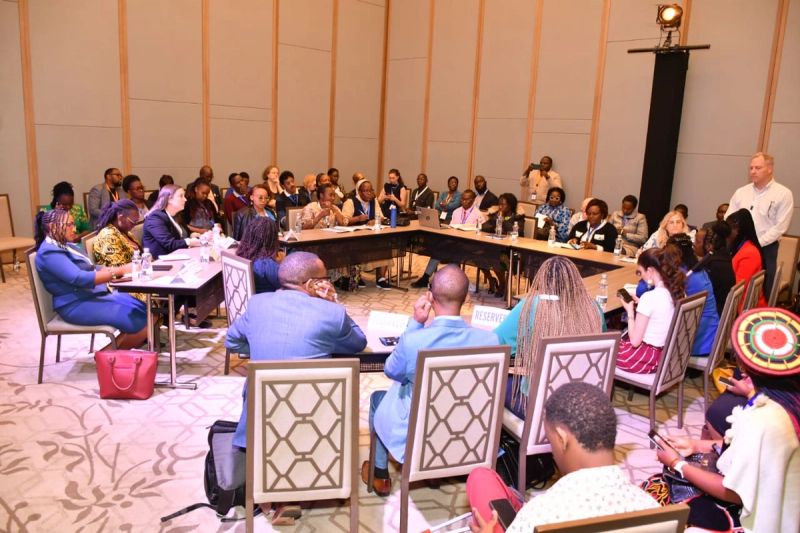
Between breakout sessions, I joined a roundtable titled "Transforming Education in Africa through Policy and Practice", moderated by the amazing Bruce Walker. His engaging facilitation style kept everyone attentive. I was eager to contribute ideas around inclusive education, but due to time constraints, I didn’t get the chance. Still, I left with this thought:
Inclusive education isn’t just about assistive tools it’s about redefining the classroom culture. Teaching students to work together, communicate with empathy, and uplift one another is at the heart of inclusion.
Later that day, I was invited by the Mastercard Foundation media team for a podcast interview. Sitting in front of the camera, typing slowly, and letting text-to-speech AI speak for me was a profound moment, a perfect demonstration of how tech enables my voice.
Day Three: My Voice on the Stage
This was the day I had waited for, the day I spoke at the conference. We gathered at a sleek hotel in the heart of Nairobi. It felt like home.
The morning started with a deep dive into the newly launched Kenya Disability Act 2025, led by Dr. Samuel Kabue and my colleague from CDPF, Eric Ngondi. I had first met them during a CDPF physical executive meeting in Kenya last year, so it was special to hear their voices again, this time pushing forward policy that could transform lives.
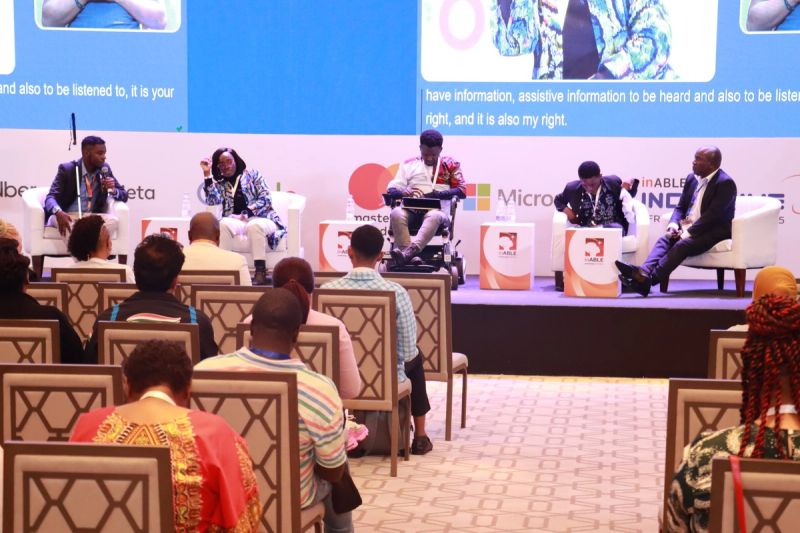
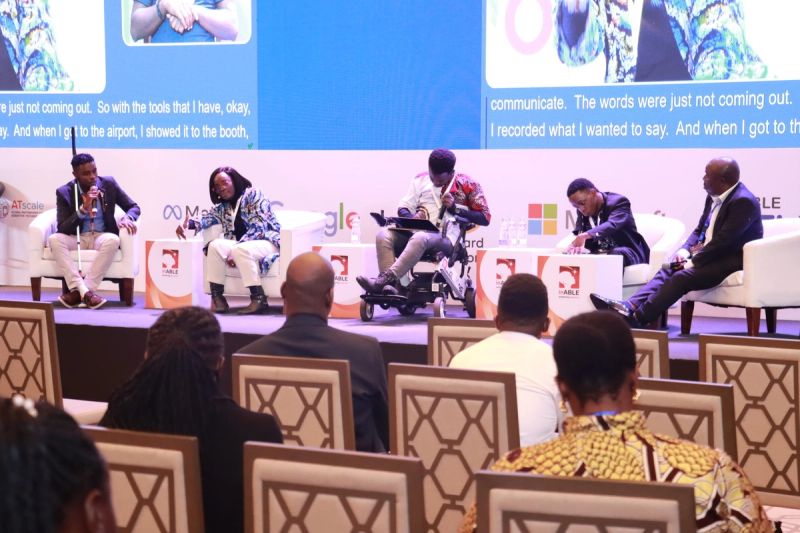
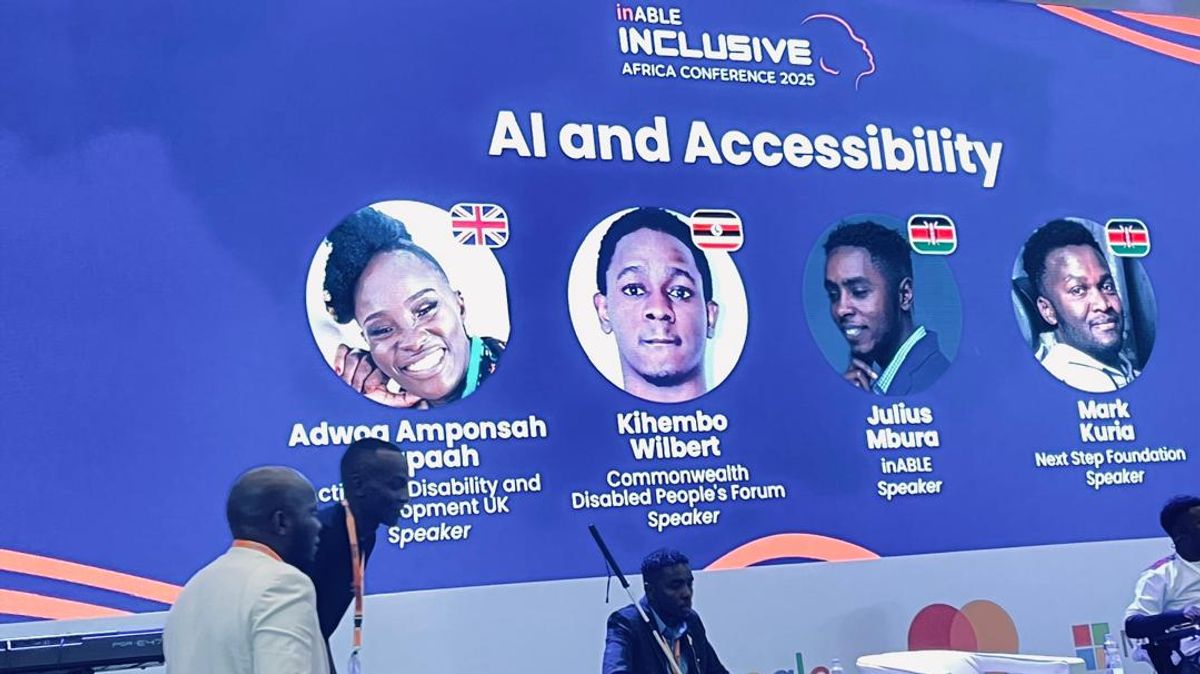
In the afternoon, I joined fellow panelists Julius, Adowa, and Mark to talk about AI tools enhancing accessibility. My role was clear and simple: to show the real-life impact of AI on my communication and work.
Being nonverbal, I type my messages and use a text-to-speech app. That voice you hear? That’s mine delivered through AI. It’s not just convenient it’s life-changing.
As a software engineer with mobility limitations, AI has shifted how I work. Tasks that once took months, like writing thousands of lines of code, are now done faster and more creatively. I focus on design, bugs, logic, and concepts, while AI helps bring those ideas to life. We call this vibe coding, a beautiful collaboration between my mind and the machine.
AI also supports my writing. It doesn’t speak for me, It helps me structure ideas and express myself clearly, saving precious time since I type slowly, while my tone, personality, and message remain entirely mine. I still shape every word, idea, and tone. AI simply supports me in expressing it more efficiently.
Through AI, I don’t just participate I thrive.
My Offline AI Innovation for Inclusive Education
At Embrace International Foundation, I’m currently working on building an offline AI chatbot for 15 partner schools in Uganda’s Rwenzori region. This tool is designed to offer learners, especially those with disabilities, access to interactive learning even in areas without internet.
But one of the biggest hurdles? Data. Most available datasets are either irrelevant locally or ignore the diversity of learners, particularly those with disabilities. This limits how inclusive and accurate the chatbot can be.
Inclusive AI starts with inclusive data.
That’s why we’re working on co-creating content with teachers and learners to make sure the chatbot reflects our students’ languages, cultures, and real-world experiences. We believe community-driven AI is the future AI, designed with the people it serves, not just for them.
With the growing rise of open-source large language models, Africa has a real chance to create AI that is local, ethical, and impactful. We can train models using African languages, cultures, and lived realities, not just to make AI “work” here, but to make it belong here.
Final Moments and Lasting Memories
The conference closed with a vibrant Gala Dinner, everyone dressed in black, celebrating the three days of connection and innovation. I was stunned watching the dance moves of Julius Mbura, a visually impaired advocacy officer at InAble so much energy and joy!
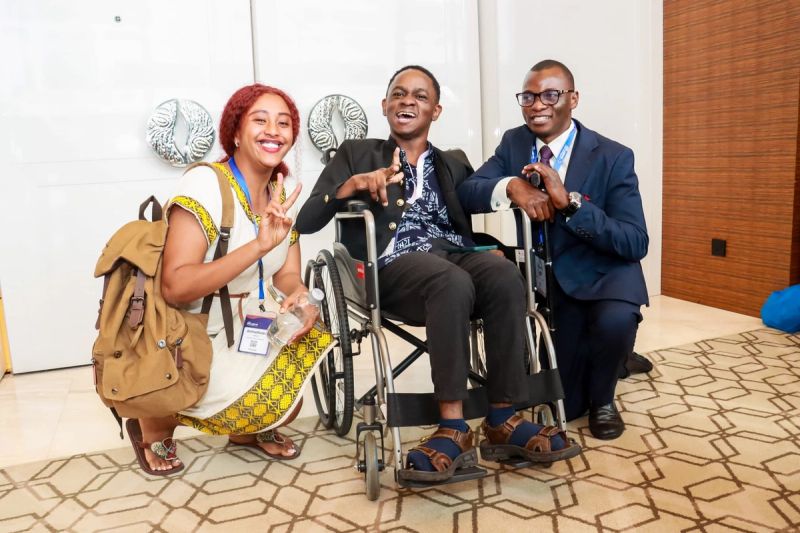
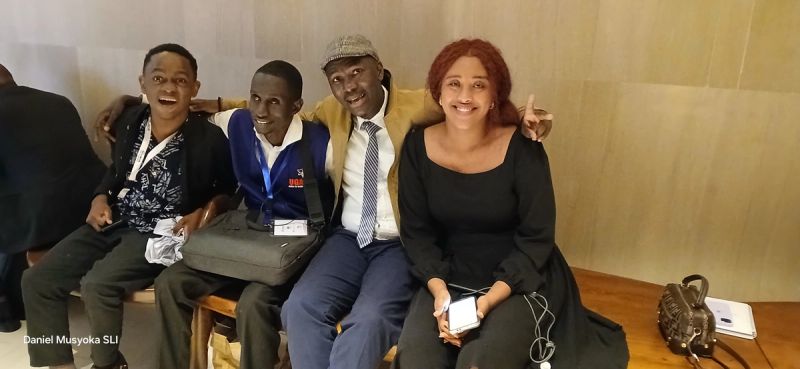
Another highlight for me was reuniting with friends from YALI (Young African Leaders Initiative), including Bethlehem and Brian, along with fellow Ugandans. These little moments reminded me that beyond tech, community and shared vision are what truly drive change.
In Closing:
Conferences like inAble’s aren’t just about networking or making connections, something that hasn’t always come easily for me. I explored that in my previous article. These gatherings are about building a movement: challenging outdated systems, reimagining what’s possible, and shaping a future where everyone belongs and no one is left behind.
And for me, it reaffirmed this truth:
AI is not just a tool it’s a bridge. One that helps me connect, express, and contribute fully.
Let’s continue to shape this future, boldly, inclusively, and with heart.
Picture Moments